The ESG Landscape in Singapore
ESG: From Voluntary to Mandatory
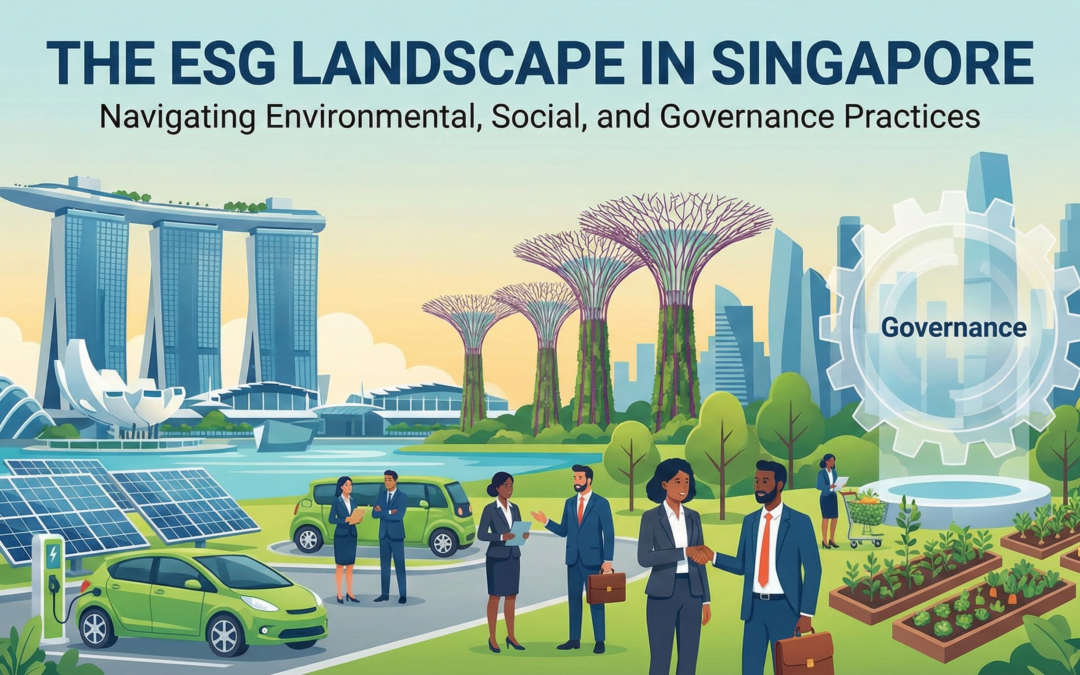
Singapore has moved decisively from voluntary ESG reporting to a mandatory climate disclosure regime, aligning with international sustainability standards.
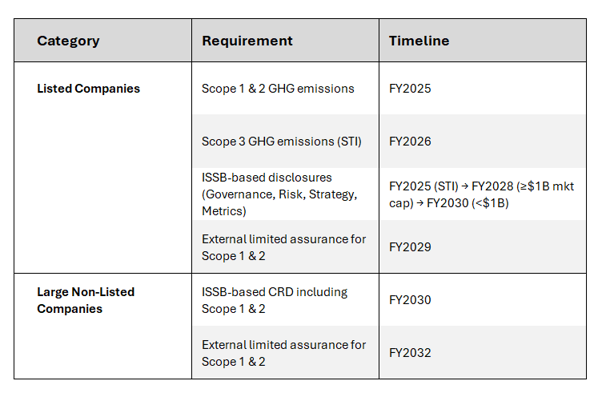
From FY2025, all listed companies will be required to report Scope 1 and Scope 2 greenhouse gas (GHG) emissions, while Straits Times Index (STI) constituents must also disclose Scope 3 emissions from FY2026. These follow the ISSB-aligned standards IFRS S1 (General Sustainability Disclosures) and IFRS S2 (Climate-related Disclosures)
Meanwhile, large non-listed companies (Large NLCos) — those with ≥ S$1 billion revenue and ≥ S$500 million assets — will begin reporting from FY2030, with external limited assurance for GHG data required from FY2032.
This phased timeline ensures readiness while maintaining Singapore’s trajectory toward a net-zero economy by 2050.
Why ESG Matters for Businesses ?
ESG reporting is more than a compliance checkbox. It is now a business imperative that influences long-term performance and stakeholder trust.
Forward-looking businesses benefit through:
- Easier access to sustainable finance, as banks link lending rates to ESG maturity.
- Supply chain inclusion, since global buyers demand carbon accountability.
- Talent attraction, as employees prefer responsible and purpose-driven employers.
- Reputation and resilience, strengthening brand trust and stakeholder confidence.
By embedding sustainability into governance and finance, companies future-proof their growth.
Navigating the Regulatory Landscape
The Accounting and Corporate Regulatory Authority (ACRA) and SGX RegCo are also offering transitional support through Enterprise Singapore’s Sustainability Reporting Grant, helping firms develop internal data and reporting capabilities.
The Opportunity Behind Compliance
While some view ESG as an additional reporting burden, early adopters recognise its potential as a strategic differentiator.
Innovation driver — Encourages investment in low-carbon technologies and circular systems.
Market access — Opens doors to sustainability-conscious investors and buyers.
Operational resilience — Builds stronger governance and risk frameworks.
Businesses that take proactive steps today will stand out tomorrow — as trusted, future-ready leaders in the green economy.
How to Get Started ?
- Assess your ESG readiness — Identify data and governance gaps.
- Develop an ESG roadmap — Align with ISSB/IFRS S1 & S2 standards.
- Invest in systems and training — Strengthen reporting and analytics capabilities.
- Engage professional support — Partner with ESG consultants to ensure credible disclosures.
Conclusion
Singapore’s ESG transformation represents both a regulatory shift and a strategic opportunity. Businesses that align early will not just comply; they’ll lead in sustainable value creation, investor trust, and long-term growth.
At FinSustain Consulting, we help businesses integrate finance with sustainability turning ESG reporting into a story of purpose and progress.
Ready to future-proof your business?
Let’s start your sustainability journey today.